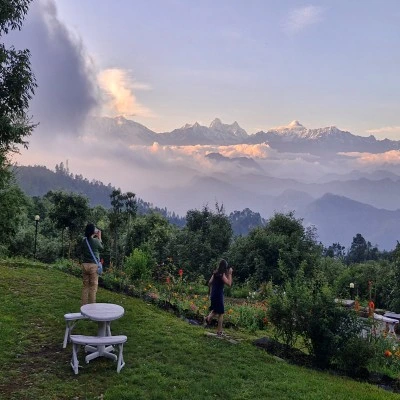
When the sun dips behind the jagged, snow-clad peaks of Nanda Devi and the last hues of burnt orange fade from the Kumaon sky, a different world awakens. In most parts of the world, nightfall signals the end of exploration. But at Misty Mountains Jhaltola, the darkness is merely a curtain rising on a new, exhilarating act.
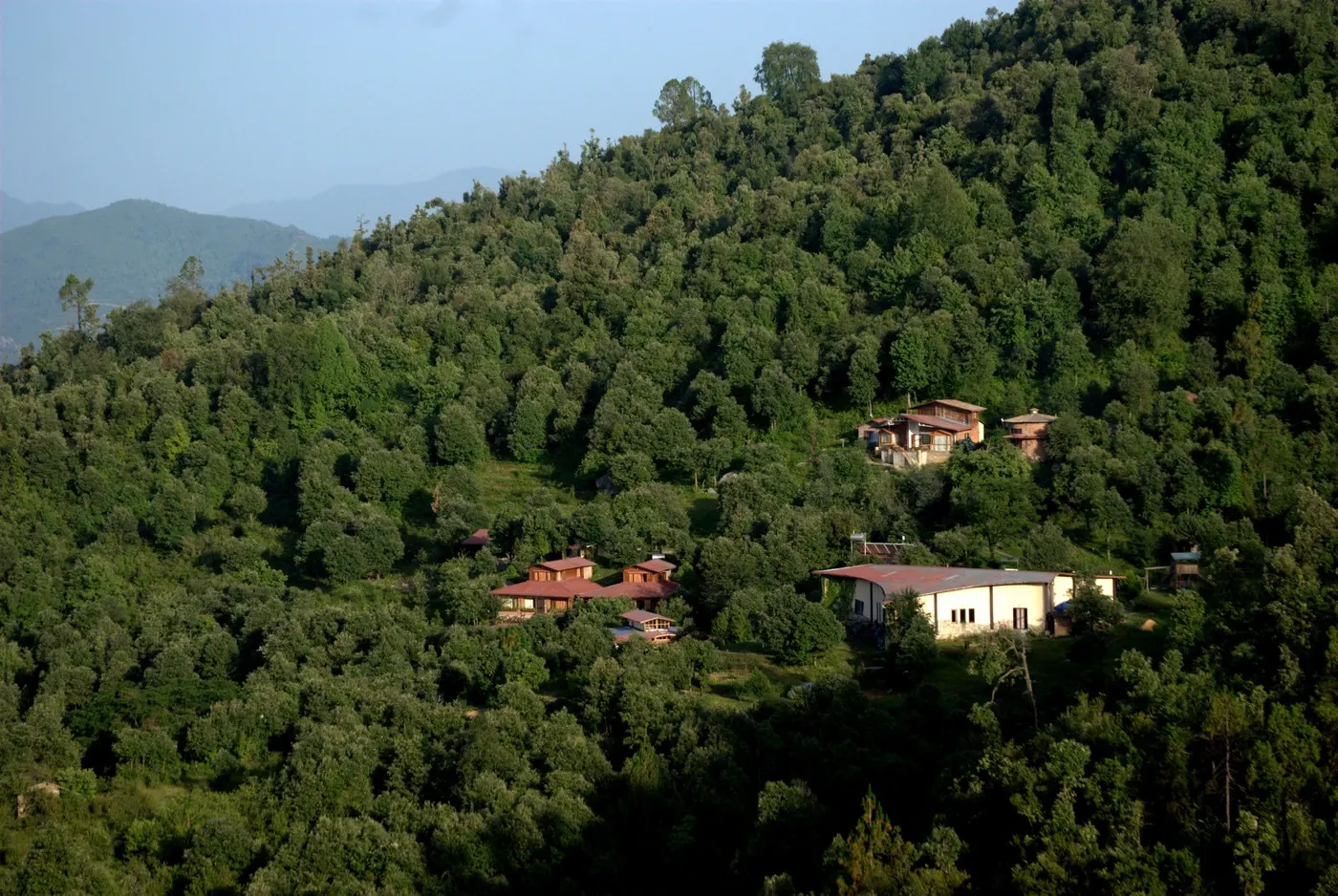
Spanning a massive 1,000-acre private forest estate, the night here isn’t just a passage of time—it is a living, breathing sensory experience. A Night Forest Walk in Jhaltola is arguably the most offbeat adventure in Uttarakhand, offering a rare, spine-chilling, yet meditative glimpse into the secret life of the Himalayas after dark.
Quick Adventure Fact-Sheet: Night Trekking at Jhaltola
| Feature | Details for the Adventurer |
| Terrain | Ancient Oak, Pine, and Rhododendron Forest Trails |
| Altitude | 7,000 Feet (2,130 Meters) — Above the Cloud Line |
| Visibility | Natural Moonlight supplemented by Tactical High-Lumen Flashlights |
| Wildlife Potential | Himalayan Leopard, Barking Deer, Flying Squirrel, Civets, Owls |
| Difficulty | Moderate; Requires focus and steady footing |
| Experience Type | Guided by Expert Local Naturalists |
Why Night Trekking is the Ultimate Offbeat Adventure in Kumaon
In a travel landscape cluttered with overcrowded mall roads and noisy tourist hubs, the term "offbeat" has lost its edge. However, trekking through a high-altitude Himalayan forest at night remains a frontier for the brave. At 7,000 feet, far from the light pollution of Haldwani or Almora, the darkness is absolute and velvety.
The Psychology of the Dark: Heightening Your Senses
In the daytime, humans rely on their vision for nearly 90% of their environmental awareness. At night, your brain undergoes a fascinating shift. This is what naturalists call "Sensory Awakening." When your eyes can no longer lead, your ears take over. You begin to hear the distinct rustle of dry oak leaves 50 meters away; you smell the damp, earthy aroma of moss and the faint, sweet scent of wild Himalayan lilies that only bloom at night.
This experience connects you deeply with the Jhaltola Forest ecosystem. Your intuition sharpens, and every snap of a twig becomes a word in the forest's ancient language. It is the ultimate digital detox, where the only "notifications" you receive are from the wind and the wild.
The Secret Residents: Encountering Himalayan Nocturnal Wildlife
The 1,000-acre estate at Misty Mountains serves as a vital biodiversity corridor. During the day, the larger residents of the forest remain hidden in deep, inaccessible ravines to avoid the sun and human presence. Under the cover of darkness, they reclaim the very trails you walk upon.
The Ghost of the Forest: The Himalayan Leopard
The most heart-racing aspect of a night walk is the knowledge that you are in Leopard territory. The Himalayan Leopard (Panthera pardus) is a master of stealth and the undisputed king of the night. While these majestic cats are incredibly shy and purposefully avoid human contact, their presence is felt everywhere.
Hearing their rhythmic 'sawing' call echoing through the valley—a sound that resembles a saw cutting through wood—is a spine-chilling experience that stays with you for a lifetime. Our naturalists often point out fresh pugmarks on the damp soil, a silent testimony to the raw, untamed wildlife of Uttarakhand.
The Gliders and the Alarms: Smaller Wonders
-
Giant Red Flying Squirrels: As you point your flashlight toward the high canopy of the Oak trees, you might catch a pair of glowing amber eyes. These nocturnal gliders can cover over 50 meters in a single leap, moving like ghosts through the trees.
-
The Barking Deer (Kakar): Known as the "alarm system" of the forest, their sharp, dog-like bark often pierces the silence. If a Kakar barks repeatedly from one spot, it’s a sure sign that a predator—likely a leopard—is on the move nearby.
-
The Owls of Kumaon: From the tiny Mountain Scops Owl to the larger Himalayan Wood Owl, the forest is alive with their haunting hoots. They are the silent hunters of the night, their specialized feathers allowing them to fly with zero noise.
The Science of Sound: A Himalayan Symphony
One of the most profound realizations during a Night Forest Walk is that the forest is never truly "quiet." It is a complex orchestra.
-
The Wind in the Pines: High-altitude Himalayan Pines (Pinus wallichiana) have long needles that create a specific "hushing" sound when the wind passes through them, distinct from the broader "clatter" of Oak leaves.
-
Invertebrate Hum: In the warmer months, the background hum of crickets and cicadas creates a rhythmic pulse that seems to vibrate through the ground.
-
The Water’s Voice: If your trail takes you near a 'Dhara' (natural spring), you’ll notice how the sound of trickling water carries much further at night, acting as a natural compass for both animals and hikers.
Seasonal Magic: Bioluminescence and Monsoon Mysteries
If you visit Misty Mountains Jhaltola during the monsoon (July to September), the night forest offers a spectacle that feels like a scene from a fantasy movie.
Glowing Forests and Ghost Lights
The dampness of the rainy season brings out bioluminescent fungi. Certain species of mushrooms grow on decaying oak logs and emit a soft, ethereal green glow in total darkness. This phenomenon, known as "foxfire," is a rare sight for urban dwellers.
Coupled with thousands of fireflies dancing in the Rhododendron bushes, the forest becomes a glowing wonderland. Witnessing this "natural electricity" is a core part of our sustainable tourism philosophy—showing that the greatest light shows on earth don't require a power grid.
Safety Protocol: How We Navigate the 1,000-Acre Wild
Adventure is only enjoyable when it is safe. Exploring a Himalayan forest at night requires a level of expertise that goes beyond basic trekking.
-
Expert Naturalist Guides: Our guides are "Sons of the Soil" from the Jhaltola and Berinag region. They don't just know the trails; they know the behavior of the forest. They can identify an animal just by the "eye-shine" color reflected in a flashlight.
-
High-Lumen Tactical Gear: We provide guests with professional-grade lighting that can cut through the thickest mountain mist.
-
The Buddy System: We follow a "No-Gap" hiking protocol. We move in small, silent groups to minimize our impact on wildlife while ensuring maximum security for every guest.
-
Scent Control: We advise guests not to wear strong perfumes or deodorants, as these can alert wildlife from kilometers away, potentially scaring off the very animals we hope to observe.
The Celestial Canopy: Stargazing in a Bortle 1 Zone
A Night Forest Walk at Jhaltola isn't just about what’s on the ground; it’s about the staggering beauty above. Because the resort is miles away from any major city or industrial hub, we enjoy Zero Light Pollution.
The Stars You’ve Never Seen
When you reach the clearing at Lamkeshwar Ridge, we encourage a "Blackout Moment." We switch off all flashlights for 10 minutes.
| Aspect | Urban/Suburban Sky | Jhaltola Night Sky |
| Visible Stars | 200 - 500 | 5,000+ (to the naked eye) |
| The Milky Way | A faint smudge (or invisible) | A brilliant, colorful river of light |
| Nebulae & Galaxies | Requires high-end telescopes | The Andromeda Galaxy is visible with binoculars |
| Meteors (Shooting Stars) | Once an hour (if lucky) | Every 10–15 minutes |
This is Astrophotography heaven. The clarity is so high that you can see the craters on the moon with standard binoculars. It’s a humbling experience that provides a much-needed perspective on our place in the universe.
Step-by-Step: Your Night Walk Itinerary
7:30 PM — The Bonfire Briefing
The adventure begins at the hearth. Over a cup of warm Himalayan herbal tea, your naturalist briefs you on the "Rules of the Woods." You’ll learn about the flora and fauna of Kumaon and how to communicate using silent signals during the walk.
8:15 PM — Into the Oak Shadows
We leave the warmth of the resort and step into the tree line. The first 15 minutes are about "Ear Tuning"—getting used to the sounds of the night and shedding the urban urge to talk loudly.
9:00 PM — The High Ridge Meditation
We reach a safe clearing overlooking the valley. Here, we practice Dark Adaptation. For 10 minutes, we sit in total silence. This is the heart of the Himalayan mindfulness experience.
10:00 PM — The Warm Return
Descending back to the resort, the yellow glow of the cottage lights feels like a welcoming beacon. We end the night with a traditional Kumaoni meal, where the adrenaline of the walk transitions into the deep, restful sleep that only mountain air can provide.
Essential Gear: Preparing for the Himalayan Night
-
Trekking Boots: Must have a high-grip sole. Wet oak leaves can be as slippery as ice.
-
Thermal Layering: Even in June, the temperature at 7,000 feet can drop to 10°C at night. In winter, it can hit zero.
-
Anti-Leech Socks: Mandatory for monsoon treks to prevent any "unwanted hitchhikers."
-
Red-Light Headlamps: If you have one, bring it. Red light doesn't ruin your night vision or startle the birds as much as white light.
Why Jhaltola is the "Real Nightlife" of Uttarakhand
In commercial hill stations like Mussoorie or Nainital, "nightlife" involves crowded clubs and neon lights. At Misty Mountains Jhaltola, we offer the original, prehistoric nightlife.
-
Total Privacy: Our 1,000-acre estate is private property. You won't meet any other tourist groups or noisy vehicles.
-
Authenticity: This isn't a curated "nature trail" with paved paths. It is a raw forest where the trails change with every season.
-
Health Benefits: Breathing the oxygen-rich night air of an Oak forest has been proven to lower blood pressure and improve REM sleep.
Frequently Asked Questions (FAQs)
Q1: Are there actual risks of a Leopard attack?
Leopards are naturally afraid of humans and noise. Our naturalists use specific techniques to ensure we don't startle them. In the history of Jhaltola, there has never been a negative human-leopard encounter during our walks.
Q2: What is the best season for the Night Forest Walk?
October to March offers the best visibility and the clearest skies for stargazing. However, July to September is best for seeing bioluminescence and fireflies.
Q3: Can people with limited mobility join?
The forest floor is uneven. While we have easier trails, a basic level of balance and walking ability is required. We recommend consulting with our team before booking.
Conclusion: A Rite of Passage for the Modern Explorer
The Night Forest Walk at Misty Mountains Jhaltola is more than just a hike; it is a challenge to your comfort zone. It is about realizing that the darkness isn't something to fear, but something to explore. In the silence of our 1,000-acre sanctuary, you don't just find wildlife; you find a version of yourself that is more present, more aware, and more alive.
The forest is calling. The stars are ready. Are you brave enough to answer?