
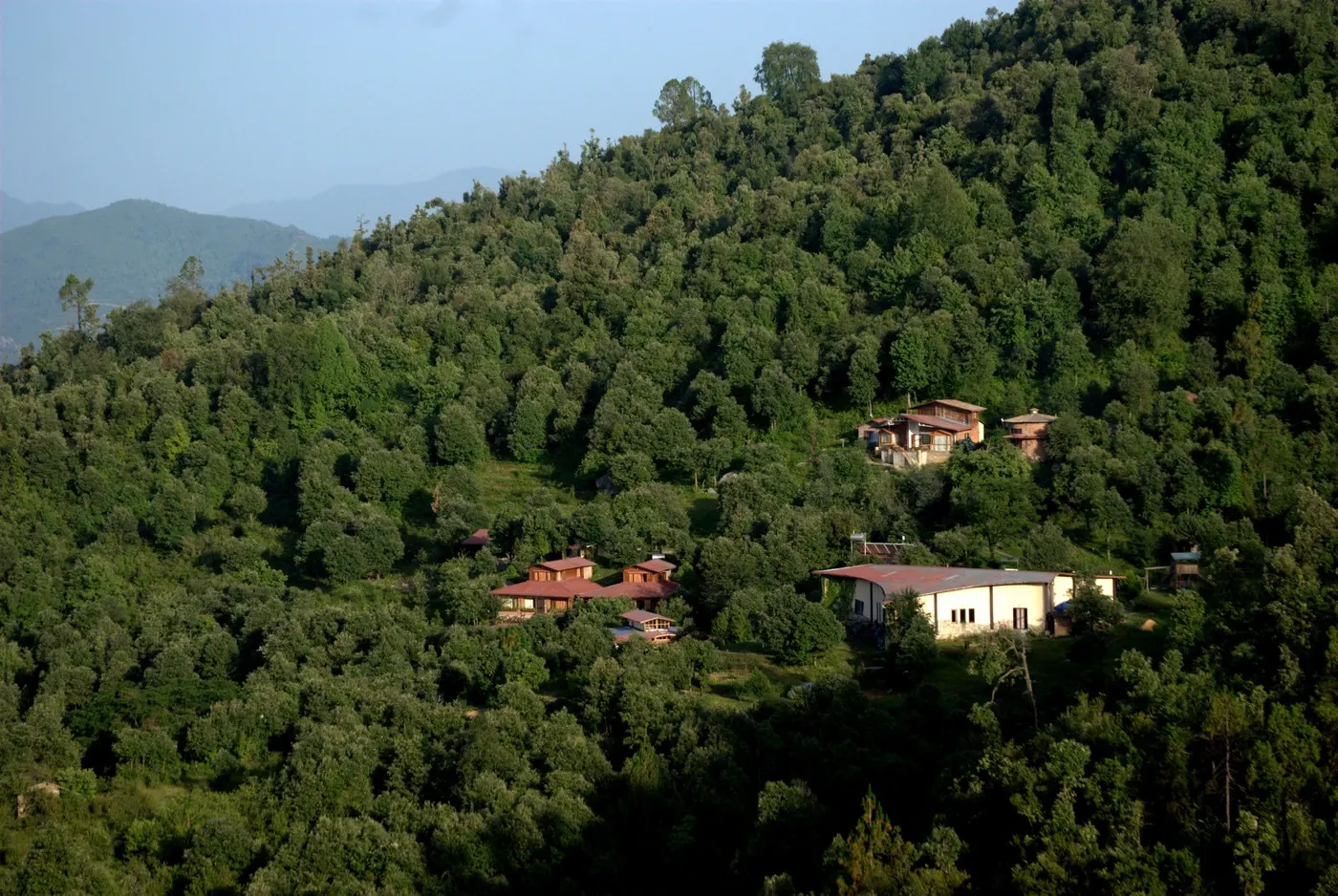
When spring arrives at Misty Mountains Jhaltola, the hills don’t just wake up; they catch fire. Not the destructive fire of the summer heat, but a vibrant, crimson blaze of the Rhododendron arboreum—locally known as Buransh. This bright red flower, which is the state tree of Uttarakhand, is more than just a visual marvel. It is the source of a drink so potent and refreshing that it has earned the title of the "True Elixir of the Kumaon Hills."
At Jhaltola, we serve our guests a chilled glass of Buransh juice as a welcome drink. It is a "Sip of the Sun," a concentrated essence of the Himalayan spring. But what makes this juice so special? Why has it transitioned from a humble forest forage to a sought-after health tonic? Let’s decode the crimson magic in a way that goes beyond the surface.
Buransh Juice: Comprehensive Nutritional & Bio-Chemical Profile
| Nutrient / Compound | Scientific Role | Impact on Human Body |
| Quercetin | Flavonol | Reduces LDL oxidation, protecting the heart. |
| Anthocyanins | Natural Pigment | Protects cells from oxidative stress and UV damage. |
| Protocatechuic Acid | Phenolic Acid | Acts as a powerful antibacterial and antifungal. |
| Vitamin C (Ascorbic Acid) | Immune Booster | Enhances collagen production and skin repair. |
| Ursolic Acid | Triterpenoid | Promotes muscle health and helps in fat metabolism. |
The Botanical Marvel: Understanding the Life of Rhododendron Arboreum
The Buransh is not your average garden flower. It is a hardy, high-altitude survivor that thrives in the temperate zones of the Himalayas, specifically between 5,000 to 8,000 feet.
The Altitude and Color Gradient: A Visual Map
One of the most fascinating aspects of this tree is how it signals its environment through color. At the lower ridges surrounding Jhaltola, you will see deep, blood-red petals. This is where the concentration of antioxidants is highest. As you ascend further into the alpine zones of the Kumaon region, the colors begin to fade—shifting to a delicate pink and eventually a pure, translucent white (Rhododendron campanulatum).
The red Buransh is what we prize for our elixir. The redder the petal, the more it has had to protect itself from the intense mountain sun, leading to a higher density of bio-flavonoids. This visual gradient is a botanical map that our local foragers have used for generations to identify the most potent flowers.
The Mitochondrial Connection: How Buransh Boosts Energy at a Cellular Level
When we call it "A Sip of the Sun," we are referring to more than just its color. Recent studies into the phytochemicals of the Rhododendron suggest a deep connection with how our bodies process energy.
Fighting Oxidative Stress in the High Altitude
At high altitudes like Jhaltola, the body can experience oxidative stress due to lower oxygen levels and higher UV exposure. Buransh juice contains a specific profile of polyphenols that helps the mitochondria—the "powerhouses" of your cells—operate more efficiently. By reducing the "noise" of free radicals, the juice allows your body to recover faster from physical exertion. This is why a glass of Buransh after a trek through our 1,000-acre estate feels so instantly restorative.
The Science of Healing: The Cardio-Protective Giant
In the world of nutraceuticals, Buransh is gaining international fame as a heart-healing superfood. While urban medicine is just catching up, Himalayan grandmothers have used this "forest pharmacy" for centuries.
Managing Blood Pressure Naturally
The presence of Rutin and Quercetin in Buransh juice acts as a natural vasodilator. This means it helps in relaxing the blood vessels, which in turn helps in maintaining healthy blood pressure levels. For guests visiting from the high-stress environments of cities like Delhi or Mumbai, this natural "coolant" for the circulatory system provides a much-needed physiological reset.
Anti-Inflammatory and Gut Health
The tannins found in the petals have a mild astringent quality, which is excellent for the digestive tract. In traditional Kumaoni medicine, Buransh was the go-to remedy for stomach-ache and seasonal allergies. It acts as a natural anti-inflammatory agent, soothing the lining of the gut and helping the body flush out toxins accumulated from processed city diets.
Historical Expeditions: How Buransh Captured the World’s Imagination
The Buransh has a long history of being "discovered" by travelers. In the 18th and 19th centuries, British botanists who visited the Kumaon region were so mesmerized by the "Tree Rhododendrons" that they sent seeds back to the Royal Botanic Gardens at Kew.
The King of the Forest
While Europe has many shrubs, they were shocked to see the Rhododendron growing as a massive, gnarled tree in the Himalayas. It was documented as a "Forest Giant" that provided shade, beauty, and medicine. At Misty Mountains Jhaltola, we sit in the heart of these ancient groves, some of which have trees that are over a century old. Drinking the juice here is like consuming the history of the land itself.
The Ecological Symphony: The Bird and Flower Connection
The blooming of Buransh at Jhaltola is not just a treat for humans; it is a vital event for the local ecosystem. The forest becomes a vibrant, noisy stage where nature plays out its most important interactions.
Nectar for the Monal and Sunbirds
As the flowers bloom in March, they produce an abundance of thick, sweet nectar. This nectar is a high-energy food source for the Himalayan Monal (the stunning iridescent bird of the region) and various Fire-breasted Flowerpeckers. These birds act as the primary pollinators. When you visit us in the spring, your auditory experience of "The Symphony of Silence" is punctuated by the flutter of wings and the chirping of birds as they feast on the crimson bounty.
The Art of Floral Preservation: From Forest to Glass at Jhaltola
At Misty Mountains, we follow a meticulous process to ensure that the juice you drink is as close to the living flower as possible.
The Early Morning Harvest
Our foragers head into the forest at the break of dawn. This is when the moisture content in the petals is highest and the nectar hasn't been evaporated by the sun. We only pick the fully bloomed flowers, leaving the buds to open later.
The "Toxin-Free" Cleaning Process
Rhododendron leaves and some parts of the flower contain a compound called Grayanotoxin, which can be harmful in high doses. This is why the cleaning process is vital. Every single petal is hand-separated from the green base (sepals) and the stamens. This labor-intensive process ensures that the resulting juice is 100% safe and purely beneficial.
Cold-Steeping for Nutrient Retention
We don't believe in industrial boiling. High temperatures kill the delicate Vitamin C and volatile aromatic compounds. Instead, we use a cold-steeping or low-temperature infusion method. This "slow" process ensures that the deep red color and the floral aroma are locked into the syrup naturally.
Comparing the Elixir: Buransh vs. Global Superfoods
How does our local Kumaoni juice stand up against the billion-dollar industries of Acai, Goji, and Kale?
The Bio-Availability Edge
Many "superfood" supplements lose their potency during long shipping routes and chemical processing. Buransh juice at Jhaltola is Zero-Mile food. It is harvested and processed within the same ridge. The bio-availability of the antioxidants—meaning how easily your body can absorb them—is much higher when the fruit is fresh and local. It is a "living" drink that rivals any imported supplement in its density of life-giving molecules.
Sustainability and the "State Tree" Status
Being the State Tree of Uttarakhand, the Buransh carries a heavy responsibility. At Jhaltola, we act as the self-appointed guardians of these trees.
HEthical Foraging and Conservation
We follow a "Take what you need, leave what is vital" policy. We never strip a tree bare. This ensures that the birds get their share and the tree can produce seeds for the future. By promoting Buransh juice as a high-value product, we give local villagers a reason to protect the forests. When a standing tree is more profitable than timber, the forest wins.
Culinary Versatility: Beyond the Glass
While a chilled glass of juice is the classic way to enjoy Buransh, our kitchen at Jhaltola loves to experiment with this crimson ingredient.
-
Buransh & Mint Chutney: A refreshing, tangy accompaniment to our traditional Kumaoni thalis.
-
The "Mountain Sangria": A non-alcoholic mocktail made with Buransh concentrate, fresh lime, and a sprig of local rosemary.
-
Buransh Glazed Desserts: We use the syrup to glaze our puddings, giving them a natural, jewel-like red color without any artificial dyes.
-
Dried Petal Tea: For the winters, we dry the petals to create a warm, detoxifying herbal tea that tastes like a mountain sunset.
The Psychological Impact: The "Color Therapy" of the Hills
In color psychology, red is the color of energy, passion, and vitality. Seeing a whole hillside covered in red Buransh has a profound effect on the human mind.
Chromotherapy in the Wild
Walking through a forest of blooming Rhododendrons is a form of "Chromotherapy." The visual contrast of the bright red flowers against the dark green Oak leaves and the blue Himalayan sky triggers a release of Dopamine and Serotonin. When you combine this visual beauty with the refreshing taste of the juice, you experience a total sensory alignment—an "Auditory, Visual, and Gustatory" feast.
Frequently Asked Questions (FAQs)
Q1: Can I drink Buransh juice every day?
A: Yes, in moderation. A small glass (150-200ml) is perfectly fine. However, since it has natural blood-thinning properties, those on specific heart medications should consult their doctor.
Q2: Is it available all year round at Misty Mountains?
A: Yes. While the fresh bloom is only in Spring, we preserve the concentrate using traditional, chemical-free methods so you can enjoy a "Sip of the Sun" even in the middle of winter.
Q3: Is Buransh juice good for the skin?
A: Absolutely. High in antioxidants and Vitamin C, it helps in fighting skin-aging and gives your face a natural glow. It is "Beauty from within" in its purest form.
Conclusion: Returning to the Source
The Buransh is a reminder that the best medicines aren't found in a pharmacy, but on the branches of an ancient tree in a quiet forest. At Misty Mountains Jhaltola, a glass of this red elixir is more than just a drink—it is a connection to the earth, a tribute to Himalayan heritage, and a "Sip of the Sun" that heals the body and the soul.