
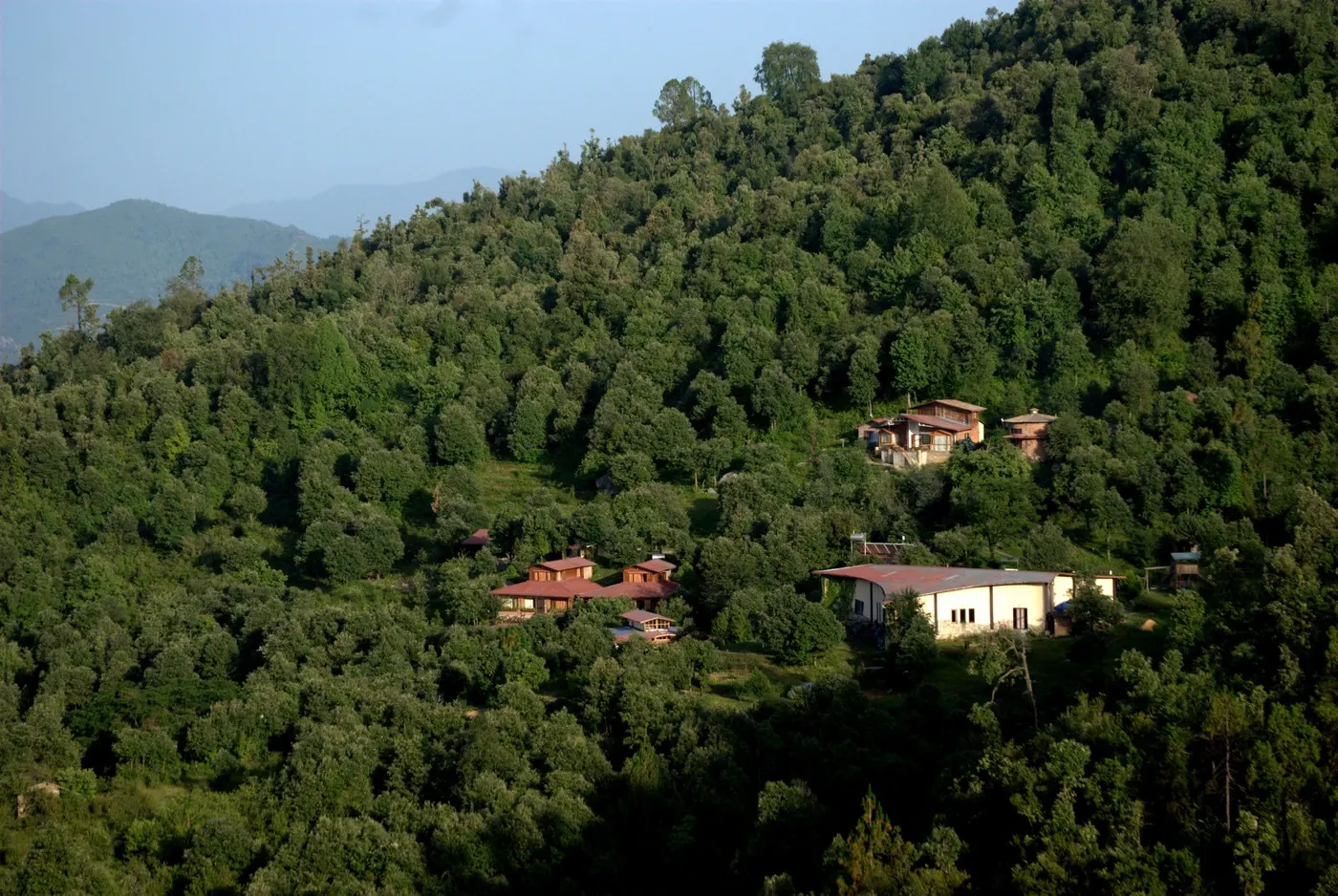
There are places that you visit for a holiday, and then there are places that quietly change the way your mind behaves. Jhaltola belongs to the second category. It is not built for entertainment, nightlife, or constant stimulation. Instead, it gives you something far more valuable in today’s world: uninterrupted mental space.
In an era where attention is constantly pulled in ten different directions, finding a location where your thoughts can slow down is becoming rare. Jhaltola, tucked into the quieter stretches of Uttarakhand’s Kumaon region, naturally creates that pause. And what makes it interesting is that this pause does not just feel like rest. For many people, it becomes a productive state where thinking becomes sharper, work becomes deeper, and distractions simply lose their grip.
What happens in such environments is not accidental. It is a combination of geography, silence, limited digital interference, and a slower rhythm of life that quietly resets how your brain responds to stimulation. You do not consciously “switch off” here. Instead, the environment stops feeding you constant noise, and your mind adjusts on its own.
When Silence Starts Working for You Instead of Against You
In most urban setups, silence feels uncomfortable at first because the brain is used to constant input. Notifications, conversations, background traffic, and screens keep the mind occupied even when you are not actively doing anything. But in a place like Jhaltola, that external input drops dramatically.
At first, this can feel unusual. There is less urgency to check the phone, less reason to scroll endlessly, and fewer visual distractions competing for attention. But after a short while, something shifts. The mind starts settling into a slower rhythm, and instead of jumping from one thought to another, it begins to stay with one idea for longer.
This is where the idea of digital detox starts making sense naturally, without forcing it. You are not trying to disconnect. You are simply in an environment where connection to digital noise feels unnecessary. That subtle difference is what makes the experience sustainable rather than forced.
Deep Work Becomes Easier When Distraction Stops Competing
Deep work is often explained as a discipline, something that requires strict routines and controlled environments. While that is true to some extent, environment plays a much bigger role than people realise.
In Jhaltola, the absence of constant interruptions creates a mental structure where focus becomes easier to maintain. You sit down to write, think, design, or plan, and the usual triggers that break concentration are simply not present. There is no background rush of urban life pulling your attention away.
What also changes is the quality of attention itself. When your brain is not processing multiple streams of unrelated input, it has more capacity to stay with a single line of thought. This is why tasks that normally take hours in a busy environment often feel more natural here. It is not that time slows down. It is that mental fragmentation reduces.
Over a few days, people often notice that they are not just working longer. They are thinking more clearly. Decisions feel less rushed, ideas feel more structured, and creative work starts flowing without constant mental resistance.
The Balance Between Productivity and Recovery Happens Naturally
One of the most interesting things about spending time in a place like Jhaltola is that you do not have to plan balance between work and rest in a rigid way. The environment itself creates that balance.
Mornings often feel naturally suited for focused work because the air is fresh, the surroundings are quiet, and the mind is at its most stable state. As the day moves forward, it becomes easier to step away from screens and simply exist in the surroundings without feeling like something is missing. Even short walks or periods of doing nothing feel meaningful rather than wasted.
Evenings bring a different kind of calm. Without the usual city distractions, there is a natural tendency to slow down, reflect, or simply sit with your thoughts. This rhythm creates a cycle where productivity and recovery do not compete with each other. Instead, they support each other without effort.
Why This Environment Works for Both Detox and Deep Work
What makes Jhaltola unique is that it does not force you into a single mode of living. Some places are only good for relaxation, while others are strictly productivity-focused. Here, both states exist without conflict.
If your goal is digital detox, the environment naturally reduces your dependence on screens. If your goal is deep work, the same environment removes the barriers that usually interrupt focus. And if you are simply looking for mental clarity, both outcomes overlap and reinforce each other.
This is why such locations are becoming more relevant for remote workers, writers, planners, and anyone dealing with mental overload. It is not about escaping responsibility. It is about creating conditions where thinking clearly becomes easier again.
What Makes Jhaltola Different From Typical Hill Destinations
Most hill destinations are designed around tourism. That means more movement, more activity, more commercial energy, and more distractions packaged as experiences. Jhaltola, on the other hand, has remained relatively untouched by that kind of development.
This difference matters. Because when a place is not optimized for constant visitor activity, it retains a kind of raw quietness that is hard to replicate. There is less pressure to consume experiences and more space to simply be present.
For someone trying to reset their attention span or enter a deep work phase, this difference becomes the most important factor.
Final Thought
In a world where attention has become the most fragmented resource, places like Jhaltola offer something rare. Not escape, not entertainment, but clarity.
Whether someone goes there to step away from digital overload or to complete meaningful work without interruption, the result often overlaps. The mind slows down, distractions reduce, and thinking becomes more structured.
Sometimes productivity does not come from pushing harder. It comes from removing what constantly pulls you away from yourself.