
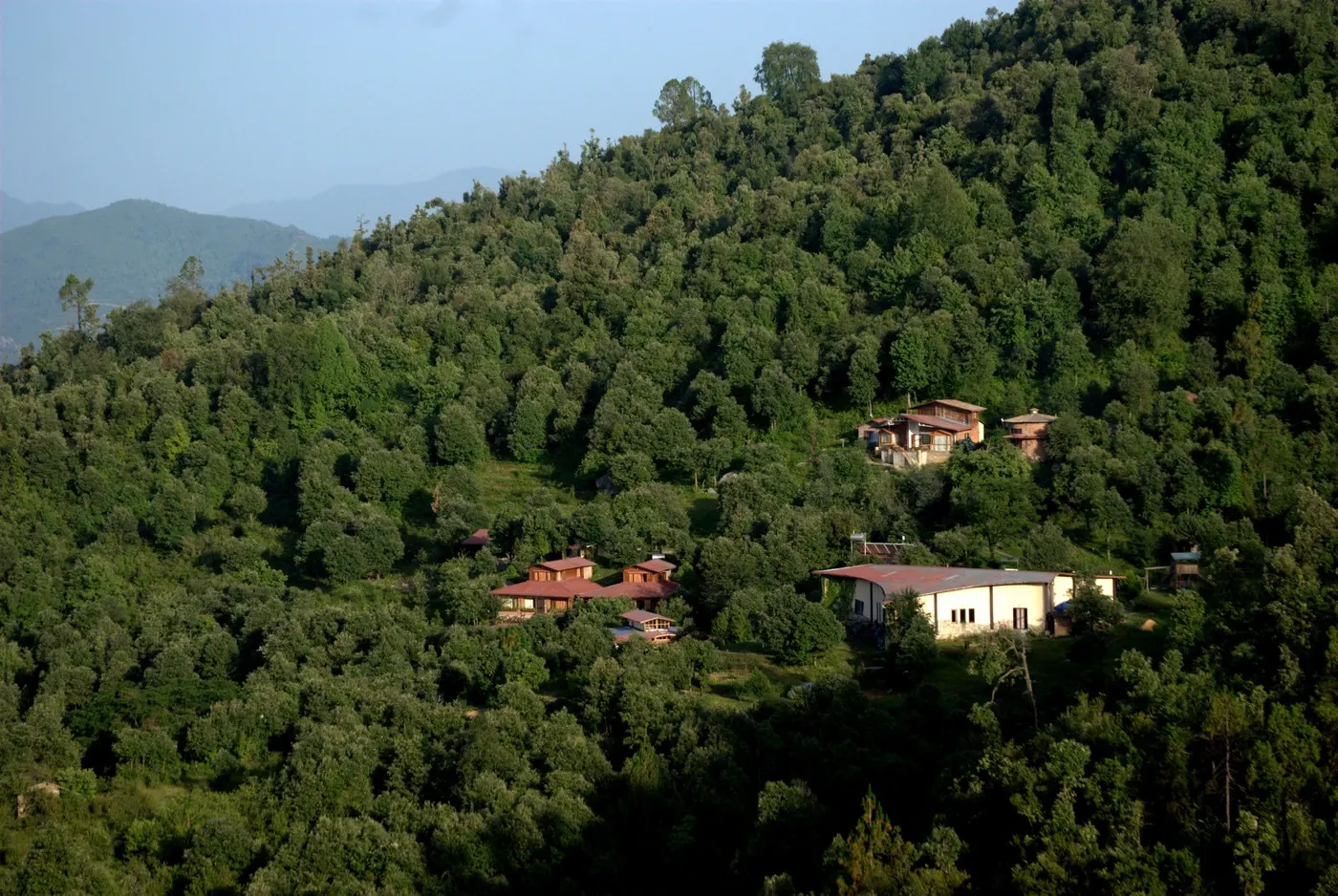
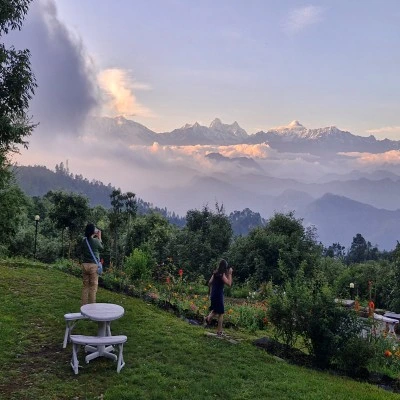
The air at 7,000 feet doesn’t just feel colder; it feels thicker with life. As you leave the winding dust of the Ghat road and ascend toward the Jhaltola ridge, the atmosphere shifts. The rhythmic hum of distant village life fades, replaced by the deep, resonant silence of an ancient forest. You aren't just entering a resort; you are stepping into a 1,000-acre living, breathing sanctuary that stands as a silent sentinel over the Kumaon Himalayas.
In an era where "over-tourism" has turned many Himalayan gems into concrete echoes of the cities we try to escape, Misty Mountains Jhaltola offers a different narrative. It is a narrative of restraint, of rewilding, and of a deep-seated respect for the vertical landscape. This is the story of how a private estate became the ultimate guardian of the peaks.
Quick Estate Overview: Jhaltola at a Glance
| Feature | Detailed Description |
| Altitude | 7,000 Feet (approx. 2,130 meters) — Above the cloud line. |
| Total Area | 1,000 Acres of Private Forest Estate — One of the largest in North India. |
| Core Ecosystem | High-altitude Oak (Banj), Rhododendron (Buransh), and Deodar. |
| Primary Peak Views | 180-degree view of Nanda Devi, Trishul, and Panchachuli. |
| Vibe | "Slow Travel" focus; Zero commercial noise; Pure Wilderness. |
2. The 1,000-Acre Legacy: From Tea to Timber
To understand the soul of Jhaltola, one must look at its roots. Long before it became a refuge for the weary urban soul, this land was part of the historic Berinag tea estate. Established during the British era, these slopes were once meticulously manicured for the "Berinag Tea" that was once famous across the subcontinent for its unique Chinese-variety flavor. Legend has it that the tea from these ridges was so prized that it was often compared to the finest brews from Darjeeling.
However, as the decades passed and the tea industry shifted, nature began its slow, persistent reclamation. When the current guardians, Madhur and Ambika, took over the stewardship of this vast estate, they faced a monumental choice. They could have chosen the path of "mass-market tourism"—building high-rise hotels and leveling the slopes for parking lots. Instead, they chose the path of Environmental Stewardship.
Today, the tea bushes still exist in wild patches, but they are now cradled by a massive canopy of Banj Oak (Quercus leucotrichophora). By limiting the construction to a very small footprint, the estate has allowed the forest to "rewild." This 1,000-acre expanse now acts as a vital carbon sink and a private biodiversity corridor. It is a place where nature is the primary architect, and humans are merely silent observers.
2. The Architecture of Restraint: Sustainable Luxury in Uttarakhand
Conservation at Misty Mountains isn't just a buzzword; it is etched into the very stone of the cottages. Unlike the glass-and-steel structures popping up across Uttarakhand, the dwellings here are an ode to traditional Kumaoni craftsmanship.
The use of local stone and wood isn't just for aesthetics. These materials provide natural insulation—keeping rooms warm during the biting Himalayan winters and cool during the bright summer sun—reducing the need for heavy electrical heating or cooling. The cottages are scattered across the slope, following the natural contours of the land rather than flattened terraces. This prevents soil erosion and allows the natural flow of rainwater to reach the roots of the ancient oaks below.
When you sit on your verandah at Jhaltola, you aren't looking at a forest; you are sitting within its protective embrace. The "Guardian of the Peaks" isn't just the mountain range in the distance; it is the 1,000-acre ecosystem that keeps this paradise wild, pristine, and hauntingly beautiful.
2. The Silent Sentinels: Wildlife and Biodiversity
The 1,000-acre expanse of Misty Mountains Jhaltola is a critical biodiversity corridor in the Kumaon Himalayas. While most tourists head to crowded wildlife parks for a safari, the true naturalist knows that the silent, high-altitude forests of Jhaltola offer a far more intimate encounter with the wild.
Biodiversity at Jhaltola: A Naturalist’s Checklist
| Category | Key Species & Details | Importance |
| Apex Predators | Leopard (Panthera pardus) | Controls the population of herbivores; indicates a healthy forest. |
| Herbivores | Barking Deer (Kakar) & Ghoral | Frequently seen near the cottages at dawn and dusk. |
| Key Avifauna | Himalayan Monal & Koklass Pheasant | Iconic high-altitude birds that thrive in the undisturbed oak canopy. |
| Floral Variety | Moss, Lichens, and Wild Orchids | Indicators of the purest air quality and zero pollution. |
The Elusive Neighbors: Mammals of the Oak Forest
Because the property has restricted construction and maintained a zero-noise policy, animals like the Barking Deer are frequently spotted drinking from natural springs. If you are lucky, you might even hear the rhythmic sawing call of a Leopard patrolling the ridgeline at night—a reminder that in Jhaltola, humans are merely guests in nature's living room.
An Avian Paradise: Birdwatching in Jhaltola
For bird enthusiasts, Misty Mountains is nothing short of a pilgrimage. The mix of ancient Oak, Pine, and Rhododendron creates multiple nesting layers. From the flamboyant Great Barbet to the Rufous-bellied Woodpecker, over 150 species of birds have been recorded within the estate. The absence of commercial traffic ensures that the "Himalayan Soundscape" remains pure, making it one of the best offbeat birding destinations in Uttarakhand.
2. The Spiritual Ascent: Shikhar Devi and the Sacred Forest
Conservation in India has always been tied to spirituality, and Jhaltola is no exception. At the highest point of the estate sits the ancient Shikhar Devi Temple. The trek to the shrine is a meditative journey through dense canopy, where the ground is carpeted with pine needles and the air smells of crushed herbs.
The Crown Jewel: 360-Degree Himalayan Views
Reaching the summit is a spiritual reward. On a clear day, the entire Nanda Devi Range, including Trishul, Maiktoli, and Mrigthuni, stands in a massive white arc against the deep blue sky.
The temple acts as a cultural anchor. By preserving the forest around this sacred site, Misty Mountains ensures that the spiritual energy of the mountain remains untainted by commercial greed. This is a place for mindfulness and introspection, where the grandeur of the peaks humbles the ego and restores the soul.
2. Gastronomy of the Earth: Authentic Kumaoni Flavors
At Misty Mountains, the Farm-to-Table philosophy is a way of life led by Ambika, who oversees the estate's organic gardens. The soil here, enriched by decades of fallen oak leaves (natural humus), produces some of the most nutrient-dense vegetables in the region.
Savoring the Flavors of Kumaon
The resort’s kitchen focuses on traditional Kumaoni dishes that are both healing and hearty. Imagine sitting by a bonfire and savoring:
-
Bhatt ki Churkani: Protein-rich black soybean gravy.
-
Madua Roti: Gluten-free finger millet bread topped with fresh ghee.
-
Pahadi Namak: Salt infused with herbs and chilies, hand-ground on a sil-batta.
By sourcing ingredients locally and growing their own produce, the estate reduces its carbon footprint while supporting the local agrarian economy of the surrounding villages.
2. Seasonal Guide: The Changing Face of Jhaltola
Every season at Misty Mountains tells a different story. To help you choose the right time for your retreat, we’ve created this detailed guide:
| Season | Experience | Ideal For |
| Spring (Mar - Apr) | The Red Bloom: Rhododendrons turn the forest into a sea of crimson. | Photographers, Birdwatchers, and Couples. |
| Summer (May - June) | The Great Escape: While the plains burn, Jhaltola remains cool (15-25°C). | Families and "Work-from-Mountain" travelers. |
| Monsoon (July - Sept) | The Mist & Clouds: Clouds literally enter your balcony; the forest turns emerald. | Writers, Poets, and Nature-immersion seekers. |
| Winter (Oct - Feb) | The Crystal Clarity: Snow-capped peaks are visible 24/7; occasional snow. | Serious Trekkers and Peak-gazers. |
2. The Philosophy of 'Slow Travel'
In the modern world, we are obsessed with "doing." Jhaltola teaches us the art of "being." This is the core of Slow Travel. It’s about spending four hours watching the mist roll over the valley. It’s about noticing the way the moss grows on the north side of an Oak tree.
By maintaining such a large estate with so few rooms, Misty Mountains intentionally limits the number of humans on the ridge. This creates an atmosphere of exclusive solitude. You aren't sharing the sunset with a hundred other tourists; you are sharing it with the mountains themselves.
2. Sustainable Travel: The Path Forward
As we move toward a future where "pristine" becomes a luxury, places like Misty Mountains Jhaltola serve as a blueprint for Responsible Tourism.
The Pillars of Sustainability at Jhaltola:
-
Water Wisdom: Instead of relying on tankers, the estate uses traditional water harvesting and preserves local 'Dharas' (natural springs).
-
Community Integration: By hiring from villages like Raigar and Jhaltola, the resort ensures that tourism benefits the local economy directly.
-
Plastic-Free Mission: A strict policy against single-use plastics to keep the 1,000-acre forest clean.
2. Frequently Asked Questions (FAQs)
Q1: How do I reach Misty Mountains Jhaltola?
The nearest railhead is Kathgodam. From there, it’s a scenic 6-7 hour drive through Bhowali, Almora, and Berinag.
Q2: Is Jhaltola suitable for senior citizens?
Yes. While it is a forest estate, the cottages are accessible, and the atmosphere of peace and fresh air is highly recommended for rejuvenation.
Q3: Can I see snow at Misty Mountains?
Yes, during peak winter (late December to January), the estate often receives a beautiful blanket of snow, turning it into a winter wonderland.
Q4: Is it pet-friendly?
Yes! With 1,000 acres to explore, your pets will have the time of their lives in a safe environment.