
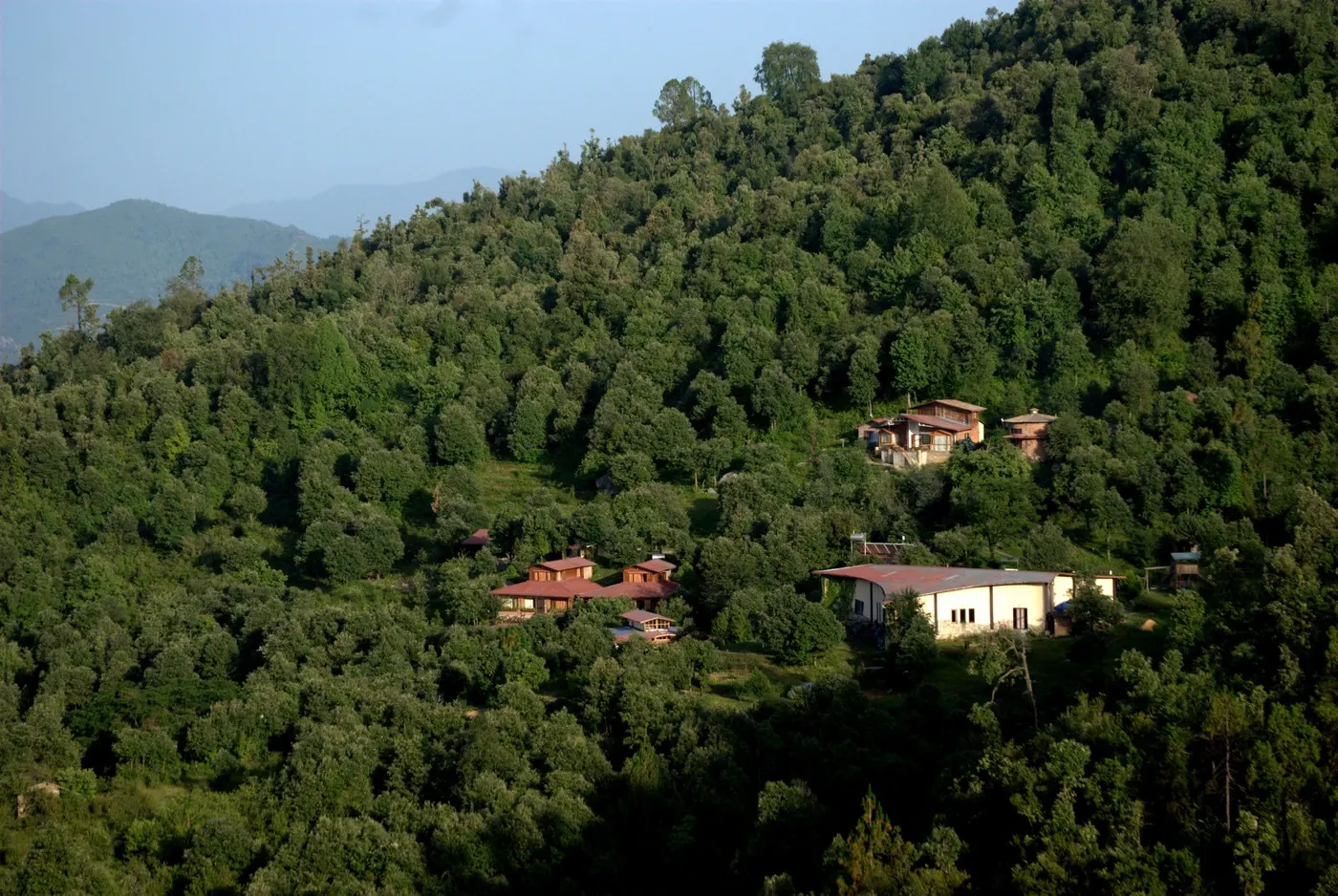
When people imagine a mountain getaway, they often picture scenic views, cool weather, and peaceful surroundings. While these experiences certainly define a stay in the Kumaon Himalayas, there is another aspect of forest life that many visitors don't expect until they experience it firsthand: sound.
Not the sound of traffic, notifications, or crowded marketplaces, but the natural soundtrack of a living forest. Deep within the 1,000-acre forests surrounding Jhaltola, every hour brings a different collection of sounds that reveal the rhythms of the mountains. These sounds tell stories about changing weather, wildlife activity, seasonal transitions, and the health of the ecosystem itself.
For travelers seeking a peaceful stay in Kumaon, the forests around Jhaltola offer something increasingly rare in modern life. Silence exists here, but it is not empty. It is filled with subtle sounds that many people have never heard before. Visitors arriving from cities such as Delhi, Lucknow, or even nearby destinations while searching for a homestay in Haldwani, a home stay in Nainital, or a stay near Kainchi Dham often find themselves fascinated by how different the natural soundscape feels.
The longer you spend in the forest, the more you begin to notice. Sounds that initially blend into the background become distinct voices in the landscape. What first appears to be silence slowly reveals itself as a rich and complex conversation taking place among trees, birds, insects, streams, and mountain winds.
Here are ten unforgettable sounds that can only truly be appreciated deep inside the forests of Jhaltola.
1. The Dawn Chorus of Himalayan Birds
The forest begins speaking long before sunrise.
As darkness slowly gives way to early morning light, dozens of bird species begin announcing the start of a new day. Unlike urban areas where mornings are often interrupted by traffic and human activity, the forests of Kumaon awaken through birdsong.
The dawn chorus is not a single sound but a layered symphony. Different species call at different times, creating an evolving performance that can last for more than an hour. Some songs are soft and melodic, while others are sharp and energetic.
Guests staying near Patal Bhuvneshwar often describe their first forest sunrise as one of the most memorable moments of their trip. Sitting outside with a cup of tea while listening to the forest come alive creates a connection with nature that is difficult to replicate elsewhere.
The remarkable aspect of the dawn chorus is its unpredictability. No two mornings sound exactly the same.
2. The Whisper of Wind Through Pine Forests
Few sounds are as distinctly Himalayan as the wind moving through tall pine trees.
The forests surrounding Jhaltola contain extensive stretches of pine woodland. When mountain winds pass through these trees, they produce a soft rushing sound that many visitors initially mistake for distant water.
The intensity changes throughout the day. Gentle breezes create a subtle whisper, while stronger afternoon winds generate a deeper, more powerful resonance.
Travelers looking for a homestay in Kumaon often mention this sound when describing their experience. Unlike urban noise, which tends to demand attention, the sound of wind through pine forests has a calming effect that naturally encourages relaxation.
Many guests find themselves sitting quietly for long periods simply listening to the trees.
3. Hidden Streams Flowing Beneath the Forest Canopy
Not every stream in the Himalayas is visible.
Many forest trails around Jhaltola pass near small mountain streams hidden beneath thick vegetation. Often, visitors hear the water long before they see it.
The sound changes depending on the landscape. Some streams produce a gentle bubbling effect, while others create stronger rushing currents as they pass over rocks and narrow channels.
These waterways play a vital role in supporting local biodiversity and contribute significantly to the peaceful atmosphere that attracts visitors seeking a stay near Neem Karoli Baba Ashram or an offbeat mountain retreat.
The sound of moving water remains one of nature's most effective tools for promoting relaxation and mental clarity.
4. The Evening Calls of Himalayan Wildlife
As daylight fades, a different set of forest voices begins to emerge.
The transition between day and night creates one of the most interesting periods in the forest. Birds settle down while nocturnal species become active.
Occasional calls echo through the valleys, reminding visitors that they are sharing the landscape with a wide variety of wildlife.
These sounds are rarely loud or intimidating. Instead, they contribute to the sense of mystery that makes the forests of Kumaon so captivating after sunset.
Guests staying in remote homestays near Patal Bhuvneshwar often describe evenings as one of the most atmospheric parts of their mountain experience.
5. The Gentle Rustle of Oak and Rhododendron Leaves
While pine forests have their own distinctive sound, broadleaf forests create something entirely different.
The movement of wind through oak and rhododendron trees produces a softer, more textured sound. During certain seasons, dry leaves scattered across forest floors add another layer of acoustic detail.
Even a small movement can create subtle rustling sounds that travel surprisingly far through quiet mountain environments.
For visitors escaping busy urban centers, these small natural sounds become increasingly noticeable after spending a few days in the mountains.
This heightened awareness is often one of the unexpected benefits of a peaceful stay in Kumaon.
6. Rain Arriving Across the Valley
One of the most fascinating sounds in the Himalayas occurs before the rain actually arrives.
During monsoon season and occasional summer showers, it is often possible to hear rainfall moving across distant valleys before it reaches your location.
The approaching sound gradually grows louder as the rain advances through forests and hillsides.
This creates a unique experience rarely encountered in cities where buildings and traffic mask natural weather patterns.
Travelers staying in a home stay in Nainital or deeper within the Kumaon region frequently discover that mountain weather feels far more immersive and connected to the surrounding landscape.
The forest provides an ideal setting for appreciating these subtle environmental changes.
7. The Nighttime Symphony of Crickets and Insects
As darkness settles over Jhaltola, countless tiny voices emerge from the forest floor.
Crickets, cicadas, and other insects create a continuous background soundtrack that defines Himalayan nights.
Rather than being repetitive, these sounds constantly shift in volume and rhythm. Different species become active at different times, creating a dynamic nighttime atmosphere.
Visitors accustomed to urban environments often find this natural soundtrack surprisingly comforting.
Instead of traffic noise and distant engines, evenings become filled with the sounds of a healthy forest ecosystem operating exactly as it has for centuries.
8. Distant Temple Bells Carried by Mountain Air
One of the most unique sounds in the Kumaon region is the occasional ringing of distant temple bells.
Mountain geography allows sound to travel remarkable distances. During calm mornings or evenings, visitors may hear bells from temples located far beyond visible ridgelines.
These sounds blend seamlessly with the natural environment and contribute to the spiritual atmosphere that attracts travelers to destinations such as Kainchi Dham and Patal Bhuvneshwar.
For many guests, hearing a distant bell echo through the valleys becomes a memorable reminder of the deep cultural traditions that continue to shape life in the Himalayas.
9. The Silence Between Sounds
Perhaps the most remarkable sound in Jhaltola is not a sound at all.
It is the silence between sounds.
In modern cities, true silence is almost impossible to find. Background noise is constant and often goes unnoticed because people have become accustomed to it.
In the forests of Kumaon, pauses exist.
Moments where the wind stops.
Birds become quiet.
Streams seem distant.
And the entire landscape settles into stillness.
These brief periods of silence often have a profound impact on visitors. They create opportunities for reflection, mindfulness, and mental recovery.
Many travellers searching for the best homestay in Haldwani or a peaceful mountain retreat ultimately discover that silence itself becomes one of the most valuable parts of their journey.
10. The Sound of Your Own Thoughts Slowing Down
The final sound is perhaps the most personal.
After spending several days in the forests, many visitors notice a subtle change within themselves. The constant mental noise created by daily responsibilities begins to fade.
Thoughts feel less rushed.
Conversations become more meaningful.
Attention becomes sharper.
The natural environment encourages a slower pace that allows the mind to recover from the constant stimulation of modern life.
Whether you are visiting from Delhi, staying near Kainchi Dham, exploring Patal Bhuvneshwar, or enjoying a homestay in Kumaon, this internal shift often becomes the most lasting memory of the trip.
The forest doesn't just change what you hear around you.
It changes what you hear within yourself.
Why Forest Sounds Matter More Than Ever
Modern lifestyles expose people to an unprecedented amount of artificial noise. Traffic, machinery, notifications, and digital distractions compete constantly for attention.
Research increasingly shows that natural soundscapes can help reduce stress, improve focus, and support emotional well-being. Forest environments provide a rare opportunity to experience these benefits in their purest form.
The forests surrounding Jhaltola represent more than a scenic destination. They offer a chance to reconnect with rhythms that humans have lived alongside for thousands of years.
Visitors often arrive expecting beautiful views. They leave remembering the sounds.
Final Thoughts
The forests of Jhaltola are not silent. They are alive with voices that many travelers rarely have the opportunity to hear. From the dawn chorus of Himalayan birds and the whisper of pine forests to distant temple bells and hidden mountain streams, every sound contributes to a deeper understanding of the natural world.
For those seeking a peaceful stay in Kumaon, a homestay near Patal Bhuvneshwar, a retreat after visiting Kainchi Dham, or an escape beyond the usual tourist routes of Nainital and Haldwani, the forests offer something truly special.
The language of the forest cannot be translated into words. It must be experienced.
And once you have listened carefully, it becomes a language you never forget.